Your laundry room might not get the same attention as your kitchen or bathroom, but it’s one of the hardest-working spaces in your home. Between washing machines running multiple cycles a week and utility sinks handling everything from hand-washing delicates to cleaning muddy boots, the plumbing in this room takes a beating. And when something goes wrong, a burst hose, a backed-up drain, or inconsistent water pressure, the consequences can range from minor inconvenience to serious water damage.
At Honest Plumbing, we’ve seen firsthand what happens when laundry room plumbing gets neglected. We’ve also helped countless Denver-area homeowners upgrade their setups for better performance, safety, and peace of mind. Whether you’re planning a full remodel or just want to make a few smart improvements, this guide covers the plumbing tips you need to know. We’ll walk you through how to assess your current system, which upgrades are worth the investment, and when it makes sense to call in a professional.
Assessing Your Current Plumbing Setup
Before making any upgrades, it’s important to understand what you’re working with. A quick assessment of your laundry room’s plumbing can reveal potential issues and help you prioritize improvements. We recommend starting with two key areas: your water supply lines and your drainage capacity.
Checking Water Supply Lines
Your washing machine relies on two water supply lines, one for hot water and one for cold. These lines connect to shut-off valves on the wall behind the machine. Take a moment to inspect these connections. Are the hoses old, cracked, or bulging? Rubber hoses, which were standard for years, tend to deteriorate over time and are one of the leading causes of water damage in homes.
Also, check the shut-off valves themselves. Turn them off and back on to make sure they’re functioning properly. If they’re stiff, corroded, or won’t close completely, that’s a red flag. In an emergency, like a burst hose, you need to be able to shut off the water quickly.
While you’re at it, look for any signs of moisture, mineral buildup, or small leaks around the connections. Even a slow drip can lead to mold growth or structural damage if left unchecked.
Evaluating Drainage Capacity
Your washer’s drain system is just as important as the supply side. Most washing machines drain into a standpipe, a vertical pipe that connects to your home’s main drain line. The standpipe should be the right height (typically between 18 and 42 inches above the floor) and large enough in diameter to handle the volume of water your machine pumps out.
If your washer drains slowly, backs up, or you notice water pooling around the base, you might have a clog or an undersized drain. Older homes sometimes have 1.5-inch standpipes, but modern high-efficiency washers often require 2-inch pipes to handle their faster discharge rates.
We also recommend checking for proper venting. A poorly vented drain can cause gurgling sounds, slow drainage, and unpleasant odors. If you’re noticing any of these symptoms, it’s worth having a plumber take a closer look.
Essential Plumbing Upgrades to Consider
Once you’ve assessed your current setup, you can start thinking about upgrades that will improve functionality, safety, and convenience. Here are three of the most impactful improvements we recommend for laundry rooms.
Installing a Utility Sink
If your laundry room doesn’t have a utility sink, you’re missing out. A deep basin sink is incredibly useful for hand-washing delicates, pre-treating stained clothes, cleaning paint brushes, or bathing small pets. It’s one of those features that, once you have it, you’ll wonder how you ever lived without.
Installing a utility sink involves running both hot and cold water supply lines, as well as connecting to your drainage system. The sink should be positioned so it drains properly and doesn’t interfere with your washer hookups. If you’re tight on space, wall-mounted or corner sinks are great options.
We often install utility sinks as part of laundry room remodels, and we make sure everything is set up correctly, from the faucet to the P-trap, before we leave.
Adding a Second Drain for Overflow Protection
Washing machines can leak or overflow, and when they do, you want that water to go somewhere safe. A floor drain provides an extra layer of protection by giving water an escape route before it damages your floors, walls, or the rooms below.
If your laundry room is on a concrete slab, adding a floor drain is relatively straightforward. For rooms above ground level, it’s more complex but still possible with the right planning. Some homeowners also opt for a drain pan under the washing machine, a shallow tray that catches small leaks and directs water toward a drain or alert sensor.
These upgrades are especially important if your laundry room is on an upper floor or finished basement where water damage could be costly.
Upgrading to Braided Stainless Steel Hoses
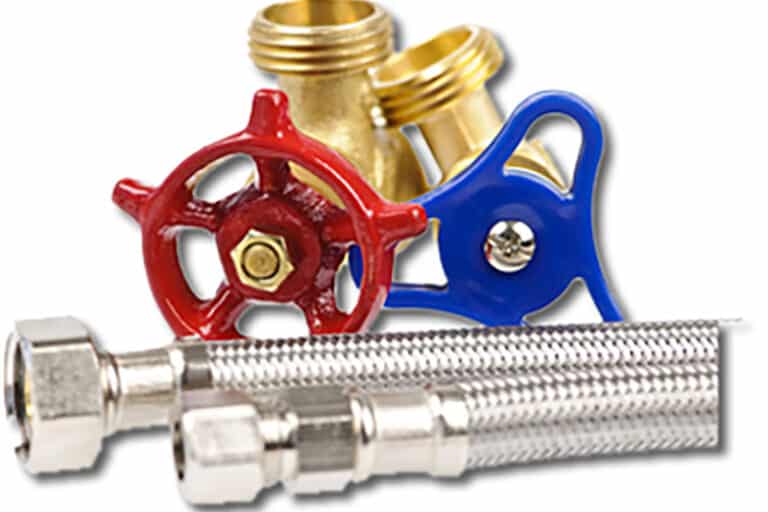
This is one of the simplest and most cost-effective upgrades you can make. Replacing old rubber supply hoses with braided stainless steel versions significantly reduces the risk of a burst hose. Stainless steel hoses are more durable, resist kinking, and can handle higher water pressure.
We recommend replacing your hoses every five years, even if they look fine. A burst washing machine hose can release hundreds of gallons of water per hour, so this small investment offers real peace of mind. When installing new hoses, make sure the connections are tight but not overtightened, cross-threading or over-torquing can damage the fittings.
Water Pressure and Temperature Considerations
Proper water pressure and temperature are essential for your washing machine to work efficiently. Too little pressure, and your cycles take forever. Too much, and you risk damaging hoses and fittings.
Most washing machines are designed to operate with water pressure between 20 and 120 psi (pounds per square inch). You can test your home’s water pressure with an inexpensive gauge that attaches to an outdoor spigot or laundry room faucet. If your pressure is consistently above 80 psi, we recommend installing a pressure regulator to protect your appliances and plumbing.
Low water pressure, on the other hand, is often caused by clogged supply lines, partially closed valves, or issues with your home’s main water supply. If you’re experiencing weak flow only in the laundry room, check the inlet screens on your washer‘s hoses, they can get clogged with sediment over time and are easy to clean.
Water temperature matters too. Hot water helps dissolve detergent and remove stains, but your water heater needs to keep up with demand, especially if you’re running the dishwasher, shower, and washing machine at the same time. If your hot water runs out quickly or doesn’t seem hot enough, your water heater may need servicing or replacement. We work on both traditional tank and tankless systems and can help you figure out the best solution for your household’s needs.
Finally, consider the distance between your water heater and laundry room. Long pipe runs can mean waiting a while for hot water to arrive. In some cases, installing an on-demand recirculating pump or a point-of-use water heater can solve this problem.
Preventing Common Laundry Room Plumbing Problems
Prevention is always easier (and cheaper) than repair. Here are some practical tips to keep your laundry room plumbing running smoothly for years to come.
Don’t overload your washer. It might seem efficient to stuff in as many clothes as possible, but overloading puts extra strain on the machine and can cause it to vibrate excessively. That vibration can loosen hose connections and stress your plumbing.
Clean the lint trap regularly, and not just the one in your dryer. Some washers have their own lint filters that need periodic cleaning. Lint and debris can also accumulate in your drain line over time, leading to slow drainage or clogs.
Leave space behind the machine. Hoses that are kinked or bent at sharp angles are more likely to fail. Make sure there’s enough room for gentle curves in your supply and drain hoses.
Shut off the water when you’re away. If you’re going on vacation or leaving home for an extended period, turn off the supply valves to your washing machine. A burst hose while you’re gone could mean coming home to serious water damage.
Inspect your hoses and connections every few months. Look for cracks, bulges, moisture, or corrosion. Catching a problem early can save you thousands in repairs.
Address small issues promptly. A slow drain, a minor drip, or a strange noise might not seem urgent, but these are often early warning signs of bigger problems. Even minor plumbing issues can escalate quickly if left unaddressed.
When to Hire a Professional Plumber
Some laundry room upgrades and repairs are well within reach for handy homeowners. Replacing a supply hose, cleaning a drain screen, or installing a simple drain pan? Totally doable with basic tools and a little patience.
But there are situations where it’s smarter, and safer, to bring in a professional. Here’s when we recommend calling a licensed plumber:
You need new supply or drain lines run. Adding a utility sink, relocating your washer, or upgrading from a 1.5-inch to a 2-inch standpipe all require working with your home’s existing plumbing infrastructure. Improper installation can lead to leaks, code violations, or damage to your walls and floors.
You’re dealing with persistent clogs or slow drains. If plunging and drain cleaner aren’t cutting it, the problem may be deeper in your system, possibly a blockage in the main sewer line or a venting issue.
You smell sewer gas. This could indicate a dried-out P-trap, a cracked pipe, or a venting problem. Sewer gas isn’t just unpleasant, it can be hazardous to your health.
You’re remodeling or changing your layout. Plumbing updates need to match your new design and meet local building codes. A professional can help you plan the work and make sure everything is up to standard.
You want peace of mind. Even if you’re comfortable with DIY projects, there’s real value in knowing the job was done right. At Honest Plumbing, we treat your home like it’s our own, with clean work and careful attention to detail. We’re licensed, insured, and we offer upfront pricing, so you always know the cost before we start.
If you’re in the Greater Denver area and need help with washer hookups, utility sink installation, or any laundry room plumbing project, we’re here to help. We offer fast response times and same-day or next-day service whenever possible.
Conclusion
Upgrading your laundry room plumbing doesn’t have to be overwhelming. Start by assessing what you’ve got, check your supply lines, evaluate your drainage, and look for any signs of wear or potential problems. From there, prioritize the upgrades that make the most sense for your home, whether that’s swapping out old rubber hoses, adding a utility sink, or installing a floor drain for overflow protection.
Small preventive steps, like regular inspections and turning off the water when you’re away, can save you from costly repairs down the road. And when a project is beyond your comfort zone or expertise, don’t hesitate to call in a professional.
At Honest Plumbing, we’ve helped homeowners throughout the Denver area keep their laundry rooms, and the rest of their homes, running smoothly. Whether you need a quick repair, a new installation, or advice on your next upgrade, we’re just a phone call away. Contact us today to schedule your service, and let’s make sure your plumbing is taken care of, honestly.