
There’s nothing quite like stepping into a warm shower after a long day, until you notice water pooling where it shouldn’t be. Shower leaks are one of those household problems that start small and quietly escalate into something much bigger. A few drips here, a damp patch there, and before you know it, you’re dealing with water damage, mold growth, or a repair bill that makes your eyes water more than the leak itself.
We’ve seen it all when it comes to shower leaks. From worn-out washers to cracked shower pans, these issues are more common than most homeowners realize. The good news? Many shower leak problems have straightforward fixes when caught early. In this guide, we’ll walk you through the most frequent causes of shower leaks, explain how to identify them, and share practical solutions, whether you’re tackling the repair yourself or deciding it’s time to call in a professional.
Why Shower Leaks Happen
Showers take a beating. Think about it, hot water, steam, constant moisture, temperature fluctuations, and daily use all put stress on various components. Over time, this wear and tear catches up with even the best-installed showers.
The most common culprits behind shower leaks include:
- Worn seals and gaskets – Rubber components deteriorate with age and exposure to water
- Loose connections – Vibration and regular use can loosen fittings over time
- Cracked or deteriorated caulk and grout – These barriers break down, allowing water to seep through
- Corroded pipes and valves – Metal components eventually wear out, especially in areas with hard water
- Improper installation – Sometimes leaks trace back to shortcuts taken during the original install
Water always finds the path of least resistance. Even a tiny gap or crack can allow moisture to escape the shower enclosure and work its way into walls, subfloors, and framing. That’s why early detection matters so much. A drip that seems harmless today can cause serious structural damage if left unchecked for months.
Understanding where leaks commonly occur helps you know what to look for, and that’s exactly what we’ll cover in the sections ahead.
Leaky Showerhead Connections
A dripping showerhead is probably the most recognizable shower leak. You turn off the water, walk away, and hear that persistent drip… drip… drip. It’s annoying, sure, but it’s also wasting water and money. A showerhead leaking at just 10 drips per minute adds up to roughly 500 gallons per year.
Most showerhead leaks happen at one of two points: the connection between the showerhead and the shower arm, or within the showerhead itself. Worn washers, degraded thread tape, and mineral buildup are the usual suspects.
How to Fix a Dripping Showerhead
The fix is often simpler than you’d expect. Here’s what we recommend:
- Turn off the water supply – You don’t want any surprises mid-repair
- Unscrew the showerhead – Use a wrench wrapped in a cloth to protect the finish. Turn counterclockwise.
- Inspect the washer – There’s typically a rubber washer inside the showerhead connection. If it’s cracked, flattened, or brittle, replace it.
- Clean the threads – Remove old thread tape and clean away any mineral deposits with vinegar or a descaling solution
- Apply new Teflon tape – Wrap the shower arm threads clockwise with 3-4 layers of plumber’s tape
- Reattach the showerhead – Hand-tighten first, then give it a quarter turn with the wrench
Turn the water back on and check your work. If the leak persists, the problem might be further back in the plumbing, possibly in the shower valve itself.
Faulty Shower Valve and Faucet Leaks
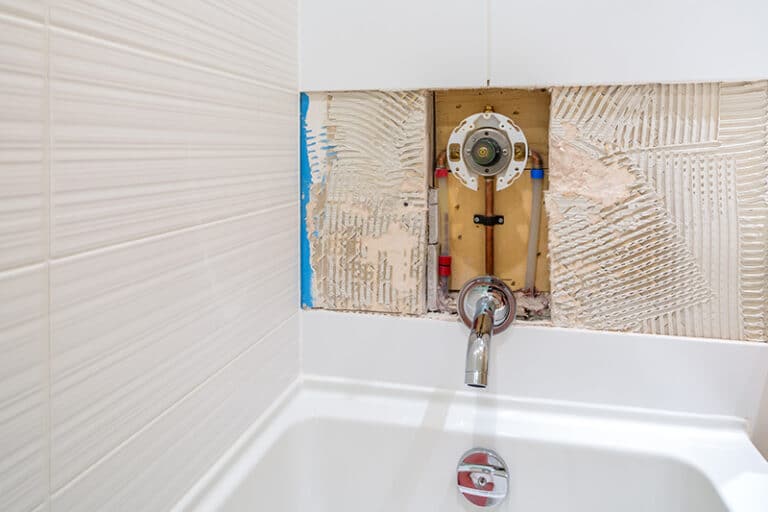
When water drips from your shower faucet even when it’s fully turned off, you’re likely dealing with a valve problem. The shower valve controls water flow and temperature, and it contains several components that wear out over time, cartridges, O-rings, seals, and seats.
You might also notice leaks behind the wall if the valve body itself has developed cracks or corrosion. These hidden leaks are particularly troublesome because water damage can spread undetected for weeks or months. Signs include:
- Water stains on the ceiling below a second-floor bathroom
- Damp or soft drywall near the shower
- Musty smells that won’t go away
- Mold appearing near the shower area
Replacing Worn Cartridges and Seals
For single-handle showers, the cartridge is usually the first thing to check. For two-handle setups, worn seat washers and valve seats are common failure points.
Here’s the general approach:
- Shut off the water – Use the shutoff valves for the bathroom, or turn off the main water supply
- Remove the handle – Pop off the decorative cap and unscrew the handle. You may need an Allen wrench or Phillips screwdriver.
- Access the cartridge or stem – Remove the escutcheon plate (the decorative cover around the valve) to expose the cartridge
- Pull or unscrew the cartridge – Some cartridges require a special puller tool. Others twist out.
- Inspect and replace – Take the old cartridge to a hardware store to find an exact match. Replace O-rings and seals while you’re in there.
- Reassemble and test – Put everything back together and turn on the water slowly to check for leaks
Valve repairs can get tricky depending on your shower’s age and brand. If you’re not comfortable working with the valve or can’t identify the right replacement parts, this is definitely a job where professional help makes sense. We handle valve replacements and repairs regularly, and having the right tools and experience prevents those frustrating “I made it worse” moments.
Damaged Grout and Caulk Around the Shower
Here’s a leak source that many homeowners overlook: the grout and caulk surrounding their shower. These materials create the waterproof barrier that keeps water inside the shower where it belongs. When they crack, shrink, or pull away from surfaces, water finds its way through.
Grout fills the joints between tiles, while caulk seals the transitions, where the wall meets the tub, where two walls meet at a corner, or around fixtures. Both degrade over time. You might notice:
- Crumbling or missing grout between tiles
- Caulk that’s peeling, cracked, or discolored
- Gaps where caulk has pulled away from surfaces
- Tiles that feel loose or hollow when tapped
The damage caused by failed grout and caulk often goes unnoticed until it’s significant. Water seeps behind the tiles, saturates the backer board, and can rot the studs and subfloor. We’ve seen bathroom renovations become necessary because a $20 caulk job was neglected for too long.
To repair damaged caulk:
- Remove the old caulk completely using a caulk removal tool or utility knife
- Clean the joint thoroughly and let it dry completely, this is important
- Apply painter’s tape on both sides for clean lines
- Apply a continuous bead of 100% silicone caulk (not latex)
- Smooth with a wet finger or caulk tool
- Remove the tape immediately and let cure for 24 hours before using the shower
For grout repairs:
- Remove loose or damaged grout with a grout saw or oscillating tool
- Vacuum out debris and dampen the joints
- Apply new grout, pressing it firmly into the joints
- Wipe away excess and let cure according to package directions
- Apply grout sealer once fully cured
We recommend inspecting your shower’s grout and caulk every six months. A little preventive maintenance goes a long way.
Shower Pan and Drain Leaks
The shower pan (also called the shower base) is the floor of your shower. It’s designed to be completely waterproof, directing all water toward the drain. When the pan fails, water escapes underneath, and this type of leak can cause major damage because it often goes undetected until significant harm is done.
Shower pan leaks typically result from:
- Cracks in the pan itself – Especially common in older fiberglass or acrylic pans
- Failed waterproof membrane – In tile showers, the membrane beneath the tile can deteriorate or get punctured
- Drain connection problems – The seal between the drain and pan can fail over time
- Improper installation – Inadequate slope toward the drain, missing or damaged membrane, or poor drain fitting
Drain leaks specifically occur where the drain assembly connects to the shower pan and the drain pipe below. Over time, the compression fitting or sealant can loosen or deteriorate.
Signs of a Leaking Shower Pan
These leaks are sneaky. Here’s what to watch for:
- Water stains on the ceiling below the shower – Often the first visible sign
- Loose or damaged flooring near the shower – Water migrating out from under the pan
- A musty or moldy smell – Even when you can’t see visible mold
- The shower floor feels spongy or soft – Indicates water damage to the subfloor
- Water pooling outside the shower – Not from splashing, but from below
The dam test can help confirm a pan leak: Plug the drain, fill the pan with a few inches of water, mark the water level, and wait 24 hours. If the level drops without visible drainage, water is escaping somewhere.
Shower pan repairs are among the more complex plumbing fixes. Minor cracks in certain pan materials can sometimes be patched, but often the pan needs replacement, which means removing the shower floor and possibly the surrounding tile. Drain repairs may be more manageable, involving resealing or replacing the drain assembly.
Given the potential for hidden water damage, we strongly recommend professional assessment for suspected shower pan leaks. We can identify the exact source and recommend the most cost-effective repair approach.
When to Call a Professional Plumber
Some shower leak repairs are well within reach for handy homeowners. Replacing a showerhead washer or re-caulking the tub surround? Go for it. But other situations genuinely call for professional expertise.
Consider calling a plumber when:
- The leak source isn’t obvious or you can’t pinpoint where water is escaping
- Water is coming from inside the wall or beneath the floor
- You need to access plumbing behind walls or under the subfloor
- The shower valve needs replacement and you’re unfamiliar with your specific system
- There’s evidence of water damage to structural elements
- You’ve attempted a repair and the leak persists
- The shower pan needs repair or replacement
There’s no shame in recognizing when a job exceeds your skill set or tool collection. In fact, calling a professional early often saves money compared to attempting a repair, making things worse, and then calling for help.
We locate and repair leaks in showers and other plumbing fixtures regularly. If you’re noticing water spots, higher water bills, or that tell-tale dripping sound, don’t wait for a small problem to become a big one. Even minor leaks can escalate into significant damage if not addressed promptly.
A professional plumber brings diagnostic experience, proper tools, and knowledge of local codes. We can also identify related issues you might miss, like early-stage corrosion in supply lines or inadequate ventilation contributing to moisture problems.
Conclusion
Shower leaks range from simple annoyances to serious problems, and the difference usually comes down to how quickly they’re addressed. A dripping showerhead might just need a new washer and some thread tape. A leaking shower pan, on the other hand, could mean extensive water damage lurking behind walls and beneath floors.
The key takeaways? Pay attention to the warning signs, unexplained water, musty smells, stains on ceilings, or that persistent drip you keep meaning to fix. Regular maintenance like inspecting caulk and grout can prevent many leaks from developing in the first place. And when you’re dealing with something beyond a basic fix, getting professional help sooner rather than later almost always costs less than waiting.
Your shower handles a lot of water every single day. Keeping it leak-free protects your home, your wallet, and your peace of mind. Whether you tackle repairs yourself or give us a call, the important thing is taking action before that small drip becomes a major headache.